

Little steps. Big milestones.

A step towards
independence.

Making the move from diapers to the potty is a milestone for all kids – but it doesn’t come without its challenges.

Explore the guide
From first steps
to growing confidence
A little more independent, every day.
Your guide to the next chapter01 Potty training02 Nighttime dryness03 Words that help

01 / Getting started

Potty training,
one step at a time.

Three key factors for short & successful training.

A child standing outdoors beside a white fence01

Be clear, confident and encouraging

Have a clear, confident and encouraging attitude. Be gently assertive, using phrases like, “It’s time to go to the potty now.” During potty training, never ask a child, “Do you want to go to the potty?” as it invites a refusal and then a power struggle is more likely.

Keep your tone, facial expression and body language neutral when your child has an accident. Be positive and enthusiastic when they have a success.

Smiley-face cookies with the words Just keep smiling02

Ditch the diaper & use training pants

Ditch the diaper. Use training pants so your toddler will feel the wetness and be uncomfortable.

This is essential to learning the ‘cause and effect’ relationship between their bodily sensations of weeing or pooping and then the wetness, stickiness, smelliness of what they have done.

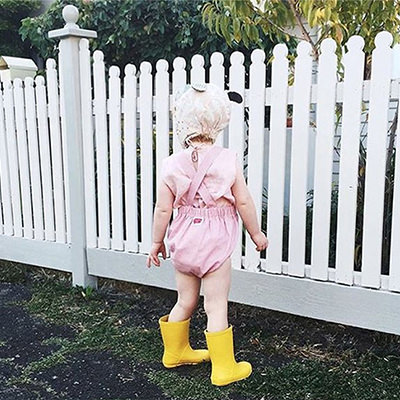
A child wearing yellow rain boots beside a garden gate03

Stay consistent in your approach

Be consistent in your approach to avoid confusing your child. Set aside time to teach your child gently.

Being on holidays is a great time. Potty Training is a skill that your child needs to practice to get right so gently and consistently keep going forward.

A child lying on a bed

The full guide / 01

When to Start

Read the article
A child riding a balance bike outdoors

The full guide / 02

How to Begin

Read the article

Time to say…

Goodbye diaper.
Hello, new adventures.

Explore training pants
Conni reusable training pants, shown in full
A child resting on a bed with Conni Kids bedding

02 / After lights out

Achieving
nighttime control.

Wetting the bed is as much a part of childhood as sand castles and ice-cream cones – only far less pleasant for all involved.

Understanding bedwetting

Bedwetting is also known as Nocturnal Enuresis and occurs when a sleeping child cannot retain urine at night, becoming ‘watertight’ at night time is a normal part of a child’s development. Nocturnal enuresis is not related to being dry during the day as a child may wet the bed for a long time after being potty trained.

Questions & answers

Nighttime dryness

5 questions
01My child is wetting the bed: should I be concerned?

Here are the facts: 30 percent of four year olds wet the bed, and by age six about 10 percent are bedwetting. By age 11 there are still five percent, or one in 20, children who are bedwetting. In other words, the vast majority of children will just grow out of bedwetting if you do nothing. In the meantime, though, bedwetting can cause embarrassment and social problems.

My advice, then, is that if your six year old is still bedwetting it is time to engage in some strategies to help your child achieve nighttime dryness while maintaining a calm and positive attitude to your child and their desire to be dry at night. You may want to consult a doctor to rule out medical causes like neurological conditions (rare) or bladder infections (not so rare).

02What causes bedwetting in children over the age of six?

The main known cause is hereditary: 75 percent of children who are bedwetters have a parent or sibling who is or was a bedwetter.

Compared with children who have achieved night-time dryness, bedwetters are more likely to: 

  • Have a smaller bladder capacity

  • Sleep deeply so don’t wake up when the bladder is full

  • Produce more urine at night (due to not concentrating urine as well).

  • Are constipated.
03How do children feel about bedwetting?

Child may not tell you how they feel, but here are some things that kid say about their bedwetting: 

  • "I get really angry with myself."

  • "I feel like a baby."

  • "I can't stay over at friends' houses."

  • “I can’t invite anyone to stay over at my house”

  • "I can’t go on school camps."

  • "I pray before I go to sleep that I won’t wet the bed."
04How can I help my child?

There are plenty of things you can try which will support your child as they grow out of bed wetting. 

  • Develop a plan with you child about how to cope. Discuss what strategies you’ll both use.

  • Have a clear aim of no wet beds. That may mean going all night without weeing or your child waking up when their bladder is full so that they can go to the toilet.

  • Avoid giving fizzy or caffeinated drinks, particularly after 4pm, but do not restrict fluids (it does not work and it feels controlling).

  • Avoid constipation by increasing fruits, vegetables, whole grains and cereals in their diet.

  • Try a night-light and make sure your child can get to the toilet easily and safely alone.

  • Do not wake your child up to take them to the toilet. This will further reduce bladder capacity and can delay natural continence.

  • Avoid disposable nappies or pull-ups as they prevent your child from feeling wet when they start to wee; thus actually prolonging nighttime bedwetting.

  • Have a minimum of two Conni Kids bed wetting pads and keep them in your child’s bedroom where they can reach them. (It is important that the child feels wet and will wake up naturally; thus learning the association between a full bladder and bedwetting).

  • If your child is sometimes dry at night a motivational star chart (like the one that comes with our Conni Kids bed pad) may be just the extra incentive your child needs to achieve night time dryness. (Avoid using a star chart, however, if your child has never had a dry night as this is not under their control and failing to win the stars and rewards may actually make things worse for your child emotionally).

  • Allow your child to go to bed in a pajama top and snug fitting undies on the bottom only; that makes it easy for your child to change their own pants. If your child is a boy get them to point their penis down inside their pants to help prevent wetting the upper bed linen.

  • Encourage your child to change their own Conni bed pad and wet pants.

  • Ensure your child has a shower or bath before they go to school to avoid your child smelling of urine and being bullied and/or embarrassed.

  • Be persistent, be positive.
05When should I see a doctor?

If you have concerns or just want to make sure your child has no underlying health conditions, particularly if they’re older than six, then it’s a good idea to see your family doctor. The doctor can rule out medical problems and may prescribe further treatment.

Bedwetting is not a problem to your child other than its impact on self-esteem but if the child is wetting the bed after the age of 6 or 7, starts to have a wet bed after a period of being dry at night, or bed wetting occurs with painful bladder, excessive thirst, pink urine or snoring, see a health care professional.

Made for everyday life

A little extra
peace of mind.

Explore Conni Kids reusable bed pads.

Explore bed pads Browse the kids range
Conni patterned reusable bed pad laid flat on a bedConni Kids bed pad displayed on a bed with a patterned cover
Daisies with a playful smiling face

03 / Words that help

Learn the
language.

Tips for successful training

The way you speak to your child about bedwetting can have a huge impact on their emotional health. Kids who are bedwetters can have decreased self-esteem and therefore it is important to maintain a positive and encouraging attitude, continue to treat the child with kindness and patience.

Questions & answers

Supportive conversations

1 question
06How should I talk to my child about their bedwetting?

The way you speak to your child about bedwetting can have a huge impact on their emotional health.

Kids who are bedwetters can have decreased self-esteem and therefore it is important to maintain a positive and encouraging attitude, continue to treat the child with kindness and patience.

  • Tell them it is not their fault and that they will grow out of it. Be positive and calm.

  • Explain that they’re not alone, according to the statistics. Say something like, “In your Grade One class there are two other children who are bedwetting.”

  • Talk to your child about your own (or your partner’s) experiences of bedwetting and the age at which you achieved nighttime dryness.

  • Encourage your child to drink six glasses of water or other fluids during the day.

  • Discourage your child from going to the toilet 'just in case' (it reduces bladder capacity).

  • Tell your child that delaying bladder emptying by a few minutes during the day (when they are at home and able to go to the toilet when needed) might be worth a try as this will help enlarge their bladder and improve bladder capacity.

  • Tell your child not to rush to the toilet: go calmly to the toilet.

  • Tell your child to take their time each time they go to the toilet so that their bladder can fully empty.

  • Ask your child’s permission to tell selected adults, like parents of friends, who may be able to assist your child if they want a sleep over.

A reusable way forward

Little changes.
A lighter footprint.

Explore the waste associated with disposable diapers and consider reusable options.

More about disposable diaper waste

Estimates · not independently verified

Americans use 27.4 billion disposable diapers each year, which is enough waste to stretch to the moon and back 9 times.

Disposable diapers represent about four percent of all solid waste sent to landfill. In a house with a child in diapers, disposables make up about 40 percent of household waste. No one knows how long it takes for a disposable diaper to decompose, but it is estimated to be about 250-500 years.

Explore reusable swim shorts
Hand-drawn stars, planets and a cometSmall steps.
A world of possibility.

Still got questions? Just ask.

Contact us